
Category: Field Files | Reading Time: 9 Minutes
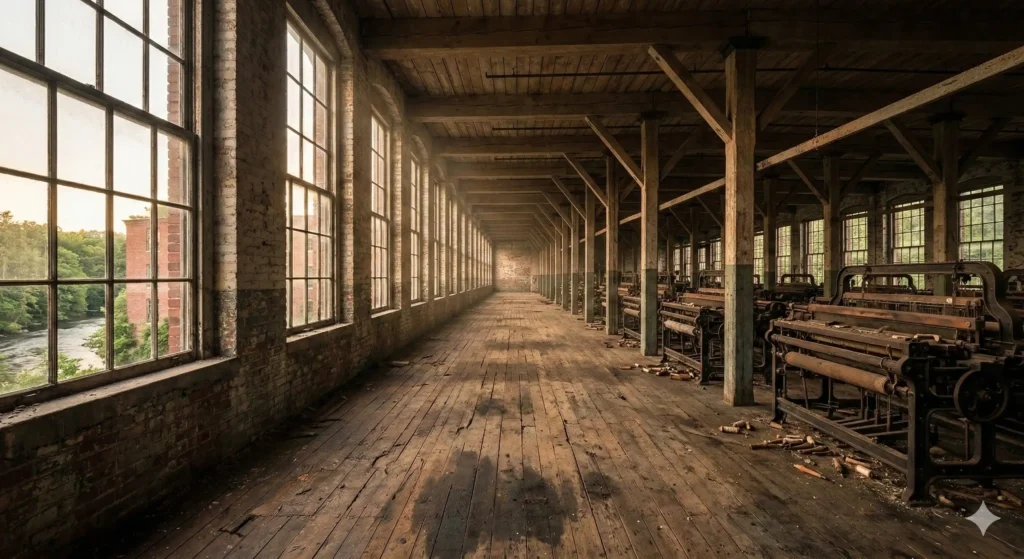
There is a staggering scale to abandoned textile mills. These colossal brick structures line the rivers of New England and the American South standing as silent monuments to the Industrial Revolution. Once filled with the deafening roar of thousands of looms these factories now sit quietly. Their massive wooden floors are warped by time and weather.
This field file explores the deep history of these massive industrial complexes. We will look at how they shaped early American towns, the economic shifts that led to their ultimate demise, and what urban explorers find inside these beautiful brick behemoths today.
1. The Birth of the Mill Town
Before the advent of reliable steam power, factories had to be built alongside fast moving rivers. Engineers used massive water wheels to capture the kinetic energy of the current. This energy was then transferred to complex systems of leather belts and wooden pulleys that powered the machines inside.
When wealthy businessmen built abandoned textile mills along these waterways, they did not just build a single factory building. They built entire company towns from the ground up. The corporation owned the factory, the homes of the workers, the local church, and the general store. The mill dictated every single aspect of a workers life from the time they woke up to the price they paid for their daily bread.
2. The Architecture of Daylight
If you look closely at the design of these historic structures, you will notice they are incredibly long and noticeably narrow. This specific shape was not an accident. Before electric lighting became common and affordable, the factory workers needed abundant natural sunlight to see the incredibly fine cotton threads on their spinning machines. Architects designed the buildings with hundreds of massive windows lining both sides of the open factory floor.
The heavy timber frames and thick brick walls were engineered specifically to absorb the intense vibrations created by hundreds of heavy cast iron machines operating all at exactly the same time. The structural engineering was so robust that these buildings often survive for centuries after they officially close.
3. The Southern Migration and Global Shift
For a very long time, the American Northeast was the absolute center of global textile production. However, during the early twentieth century, factory owners realized they could find much cheaper labor and be significantly closer to the raw cotton fields if they moved their operations to the American South. This strategic business decision triggered the first major wave of closures in New England.
Decades later, the entire industry shifted once again. The rapid rise of globalization and new international trade agreements allowed giant corporations to manufacture clothing overseas for a mere fraction of the previous cost. The massive brick factories in the Carolinas and Georgia suddenly found themselves completely unable to compete with the new foreign prices. Just like their northern predecessors, they were eventually forced to lock their heavy wooden doors and lay off thousands of dedicated workers.
4. The Hazards and Treasures of Exploration
For the modern urban explorer and the architectural photographer, these sites offer an incredible glimpse into a harsh and unforgiving working environment. The sheer scale of the empty factory floors is truly breathtaking. You will often find perfectly preserved company records, hundreds of wooden bobbins scattered haphazardly across the floor, and giant industrial freight elevators frozen in time.
However, abandoned textile mills are notoriously dangerous environments for exploration. The wooden floors are frequently soaked in decades of spilled machine oil making them incredibly flammable and highly prone to structural rot. Furthermore, the stagnant air is very often filled with hazardous particulates from decaying asbestos pipe insulation and peeling lead paint. Proper respiratory protection is strictly mandatory when entering these compromised sites.
5. Adaptive Reuse and The Future
Fortunately, not all of these beautiful buildings are destined to completely crumble into dust. Because of their beautiful exposed brick walls, massive glass windows, and sturdy wooden timber beams, these structures are highly sought after by modern real estate developers.
Through a specialized architectural process called adaptive reuse, many historic factories have been successfully converted into luxury apartments, trendy art galleries, and modern open concept office spaces. This preserves the important architectural heritage of the local community while giving the historic building a profitable second life. Yet, for every single mill that is saved and restored, many more remain hidden deep in the woods slowly being reclaimed by the very rivers that once gave them power.
Conclusion
These industrial ghost towns are vital pieces of American history that deserve our profound respect. They represent the grueling manual labor that built the modern middle class and they highlight the relentless march of global economic change. By safely documenting these spaces through photography, we help preserve the memory of the countless workers who spent their entire lives deafened by the endless roar of the mechanical looms.
Over to you: Have you ever visited a converted factory building or explored a completely abandoned one in your area? What did you think of the incredible architecture? Let us know in the comments below!