
Category: Safety & Ethics | Reading Time: 8 Minutes
Adopting the urban exploration leave no trace philosophy is the absolute most important ethical commitment you can make before stepping into an abandoned building. While securing permission and wearing the proper safety gear protects you personally, following a strict ethical code protects the physical history of the location itself.
There is a massive difference between a respectful historical archivist and a common vandal. This field file breaks down the core principles of ethical exploration. We will discuss why preserving the scene is critical, how to handle found artifacts, and why location secrecy is the ultimate form of property protection.
1. The Core Principle of Preservation
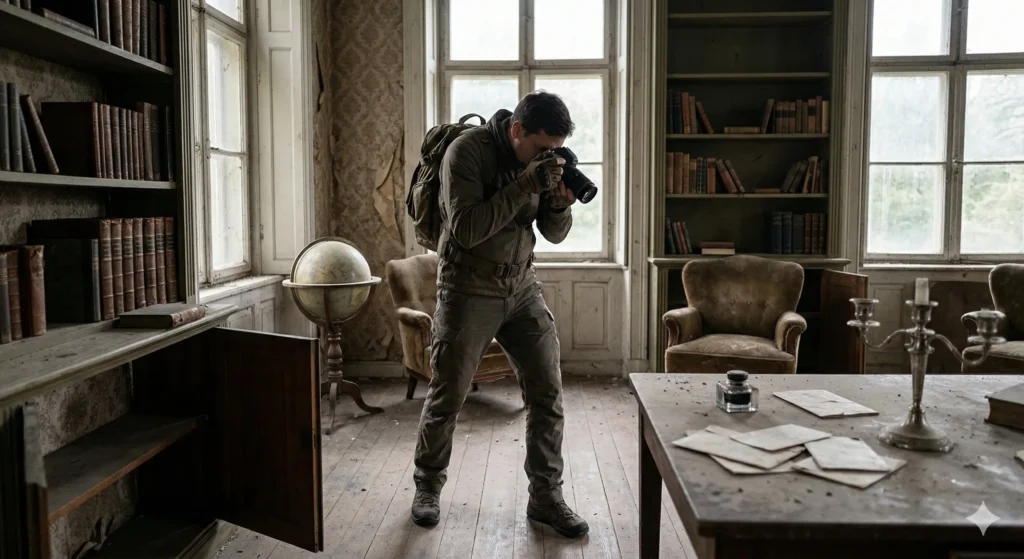
The most famous motto in the community is simple to remember but sometimes difficult to follow. You must take nothing but pictures and leave nothing but footprints. When you walk into a decaying Victorian mansion or a forgotten psychiatric hospital, you are stepping into a fragile time capsule.
Every single item left behind tells a story. A rusted pocket watch on a dusty windowsill, a stack of patient records from fifty years ago, or a yellow hard hat sitting on a factory bench all contribute to the historical atmosphere. If you take that pocket watch as a souvenir, you are committing theft. Beyond the severe legal consequences, you are permanently stealing that piece of history from every single photographer who visits after you. The scene is forever altered because of your selfish desire to own a piece of the decay.
2. The Danger of Staged Photography
Many amateur photographers fall into the trap of staging a scene to make their photos look more dramatic. They might move a creepy doll from a bedroom and place it strategically in a dark hallway. They might rearrange old medical tools on an operating table to create a more terrifying composition for social media.
This practice directly violates the urban exploration leave no trace ethics. When you move artifacts from their original resting places, you are manufacturing a fake narrative. Our job as historical documentarians is to photograph reality exactly as we find it. We are observers, not directors. True beauty in decay comes from the authentic and natural deterioration of the space over decades of neglect. Leave every single item exactly where the original owners or the passage of time placed it.
3. Vandalism and Environmental Impact
It should go without saying that breaking windows, kicking down doors, or spraying graffiti on the walls is completely unacceptable. We do not force entry into sealed buildings. If a property is securely locked, the building has won for the day and you must respectfully walk away.
Furthermore, you must pack out every single piece of trash you bring with you. It is incredibly disheartening to hike miles into the woods to find an untouched historic cabin, only to see modern plastic water bottles and empty energy drink cans littered across the rotting wooden floor. Bring a small plastic bag in your backpack specifically for your own garbage. If you want to be an exceptional member of the community, use that bag to pack out the trash left behind by less respectful visitors.
4. The Ethics of Location Secrecy
One of the most highly debated topics in the community is whether or not to share the addresses of abandoned locations. The strict ethical consensus is that you should never post exact coordinates or specific addresses publicly on the internet.
This rule is not about elite gatekeeping. It is entirely about protecting the fragile property. When a beautiful hidden location goes viral on a public forum, it immediately attracts the wrong crowd. Copper scrappers arrive to strip the wiring. Arsonists arrive to burn the structure down entirely. By keeping the location details private, you act as a protective shield between the historical site and the people who want to destroy it for profit or amusement.
Conclusion
Practicing urban exploration leave no trace principles ensures that these incredible architectural ruins survive as long as possible. The decay process is already destroying these buildings day by day. We do not need to accelerate that destruction through careless behavior or outright theft. By acting as silent and respectful observers, we honor the memories of the people who once lived and worked in these forgotten spaces.
Over to you: Have you ever found a location that was completely ruined by vandals? How do you handle keeping your favorite spots safe from harm? Let us know your thoughts in the comments below!