
Category: Safety & Ethics | Reading Time: 8 Minutes
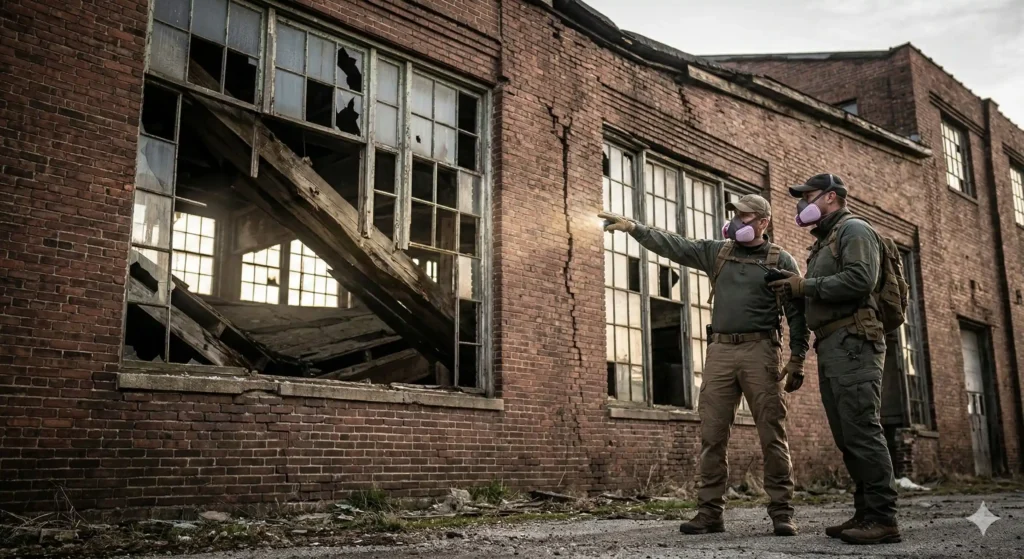
Urban exploration structural hazards are the absolute most unpredictable dangers you will face in the field. While security guards and trespassing fines are certainly stressful, a collapsed floor or a falling roof beam can be immediately fatal.
When a massive building loses its climate control and regular maintenance, the materials that hold it together begin to fail rapidly. This guide explores the critical warning signs of structural failure. We will discuss how to safely navigate rotting floors, why you must constantly assess your surroundings, and the emergency protocols you need to have in place before you ever step foot inside a decaying property.
1. The Relentless Destruction of Water
Water is the ultimate enemy of any abandoned property. Once a roof develops a leak, it is only a matter of time before the entire building falls apart. Rainwater seeps into the wooden support beams, causing them to swell and eventually rot. During the winter, this water freezes and expands, cracking concrete pillars and shattering brick walls.
When you enter a room, always look for heavy water stains on the ceiling or large pools of standing water on the floor. If the floorboards look warped or feel even slightly spongy beneath your boots, you must back away immediately. Never trust your body weight to a piece of wood that has been soaking in rainwater for a decade.
2. Safely Navigating Staircases
Staircases are notorious for failing under the weight of an explorer. They bear a massive amount of tension and are often the very first architectural features to rot completely through.
If you must climb to a second level, never walk directly up the center of the wooden steps. The center is the weakest point of the board. Instead, hug the absolute edge of the staircase where the wooden treads connect to the main support stringers or the solid masonry wall. Furthermore, only one person should ever be on a staircase at a time. If the structure does happen to give way, you do not want your exploration partner falling right on top of you.
3. Death from Above and Collapsing Ceilings
Many explorers are so incredibly focused on where they are stepping that they completely forget to look up. Urban exploration structural hazards are not just beneath your feet; they are often hanging right over your head.
Heavy plaster ceilings held up by rusting nails can drop hundreds of pounds of debris without any warning whatsoever. Look for massive cracks in the ceiling, bowed support beams, or hanging wires that indicate the structure above is actively failing. If you hear sudden groaning wood or the sound of debris trickling down from above, you need to evacuate that specific room immediately.
4. The Unique Hazards of Basements
Venturing into the basement of an abandoned factory or hospital carries a completely different set of extreme risks. Because basements are underground, they frequently flood when the power to the sump pumps is finally cut.
Wading through flooded basements is a terrible idea because the dark opaque water easily conceals open elevator shafts, rusted machinery, and jagged metal debris. Additionally, heavy toxic gases and chemical vapors naturally sink and pool in these unventilated underground spaces. If a basement smells strongly of chemicals or if you suddenly feel lightheaded, turn around and get back to fresh air immediately.
5. The Absolute Necessity of the Buddy System
Because urban exploration structural hazards are so unpredictable and building collapses happen in a fraction of a second, you must absolutely never explore alone.
If you fall through a rotten floorboard and break your leg in an empty echoing warehouse, no one is going to hear you call for help. You must always use the buddy system. One person can administer emergency first aid or run to get a rescue crew if the other becomes trapped. Before you leave your house, you must also tell a trusted friend exactly where you are going and what time you expect to return. If you do not check in by that specified time, they will know exactly where to send emergency services.
Conclusion
Navigating an abandoned building is a constant exercise in risk assessment. No photograph is ever worth a life threatening injury. By understanding how buildings decay and maintaining a constant awareness of your physical surroundings, you can greatly reduce your chances of becoming a permanent part of the history you are trying to document. Always trust your gut instinct. If a room feels unsafe, it probably is.
Over to you: Have you ever had a close call with a failing floor or a collapsing ceiling while out exploring? How do you test the stability of a room before entering? Share your survival stories in the comments section below!