
Category: Safety & Ethics | Reading Time: 8 Minutes
When preparing for a location visit, many photographers focus entirely on physical risks like rotting floors or aggressive security guards. However, urban exploration environmental hazards are actually the most persistent and life altering dangers you will encounter in the field.
Unlike a collapsing roof, you usually cannot hear or feel these microscopic threats until the permanent damage to your body has already been done. Decaying factories, forgotten hospitals, and abandoned mansions are essentially giant containment zones for toxic building materials that have been outlawed for decades.
This field file provides a comprehensive guide to identifying the most common toxic substances found inside derelict structures. We will explore the history of these hazardous materials, where they are most likely hiding, and how to prevent them from following you back home.
1. The Widespread Threat of Asbestos
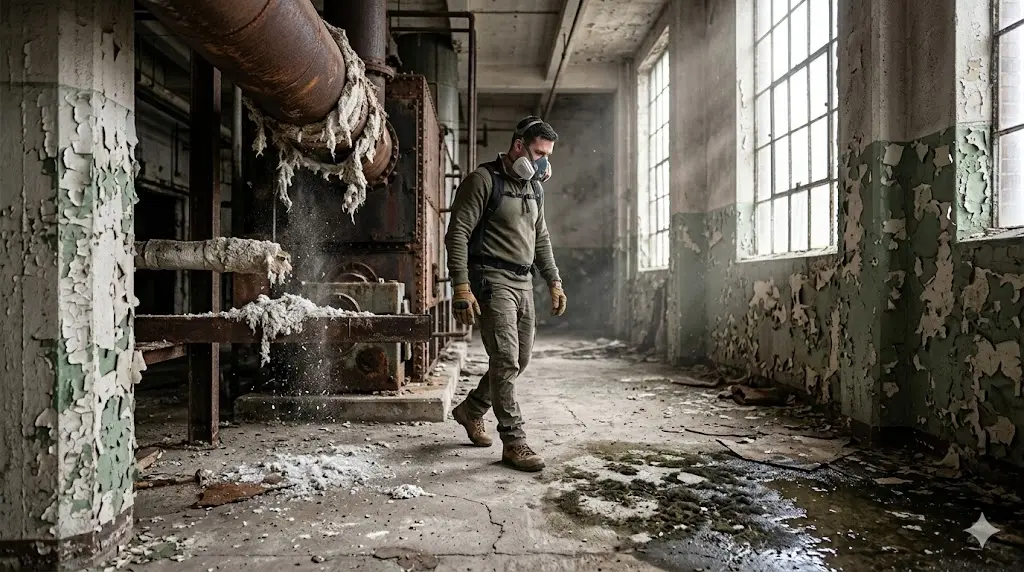
For the vast majority of the twentieth century, asbestos was considered a miracle material. Builders used it heavily for its incredible fire resistance and soundproofing qualities. You will find it wrapping old boiler pipes, mixed into floor tiles, and sprayed directly onto the structural steel of massive industrial complexes.
As long as asbestos remains completely undisturbed, it poses very little threat. However, in an abandoned building, the material inevitably decays. When the pipe insulation crumbles or the ceiling tiles break, microscopic asbestos fibers are released into the stagnant air. If you inhale these jagged fibers, they permanently embed themselves deep inside your lung tissue. This exposure can eventually lead to mesothelioma, a devastating and fatal form of cancer. You must always assume any building constructed before the 1980s is heavily contaminated.
2. Peeling Lead Paint and Toxic Dust
Before it was strictly banned in the late 1970s, lead was a standard ingredient in commercial and residential paint. It made the colors vibrant and helped the paint resist moisture. When you see those iconic, massive sheets of peeling paint hanging from the walls of a forgotten asylum, you are almost certainly looking at heavy lead contamination.
The primary danger occurs when this old paint turns into fine dust as it flakes off and falls to the wooden floorboards. Every step you take kicks this invisible lead dust up into your breathing zone. Ingesting or inhaling lead particles can cause severe neurological damage, kidney failure, and chronic joint pain. You must never eat, drink, or even touch your face while exploring an older structure to avoid accidental ingestion.
3. Black Mold and Biological Pathogens
When the roof of an abandoned property fails, rainwater inevitably pours inside and completely saturates the drywall, carpets, and wooden support beams. Without any climate control or ventilation to dry the moisture, the interior quickly becomes a perfect breeding ground for toxic black mold.
Stachybotrys chartarum, commonly known as black mold, releases mycotoxins into the air that can trigger severe allergic reactions, chronic coughing, and dangerous respiratory infections. If you shine your flashlight on a water damaged wall and see spreading patches of dark green or black slime, you are standing in a highly hazardous biological zone. In addition to mold, rotting buildings often contain massive accumulations of pigeon guano and bat droppings which carry the fungi responsible for histoplasmosis, a serious lung disease.
4. Forgotten Industrial Chemicals
Exploring an abandoned chemical plant or a forgotten manufacturing facility introduces a completely different category of severe danger. When these companies went bankrupt and abruptly locked their doors, they frequently left behind massive vats of raw chemical ingredients and unlabelled metal barrels of toxic waste.
Over the decades, these containers rust and eventually leak their contents directly onto the concrete floors. You may encounter pools of battery acid, highly flammable solvents, or heavy metals like mercury and cadmium. If you ever smell a sharp chemical odor, notice a strange metallic taste in your mouth, or see brightly colored liquids pooling in a basement, you must evacuate the property immediately. Never touch any unlabelled containers or step into unknown puddles.
5. Proper Decontamination Procedures
Surviving urban exploration environmental hazards does not stop the moment you walk out the door. If you simply jump into your car wearing your dirty exploration clothes, you will cross contaminate your vehicle and eventually your own home.
You must establish a strict decontamination routine. Keep a dedicated change of clean clothes and a pair of fresh shoes sealed in a plastic bag inside your car trunk. When you finish exploring, remove your contaminated boots and outerwear before getting into the drivers seat. Place your dirty gear into a heavy duty garbage bag and seal it tightly. Once you get home, wash your exploration clothes separately from your regular laundry and jump straight into a hot shower to wash any lingering dust from your hair and skin.
Conclusion
The invisible dangers hidden inside abandoned architecture demand your absolute respect. Ignorance is never an excuse when your long term health is on the line. By understanding exactly what these toxins look like and treating every derelict building as a hazardous environment, you can safely photograph history without sacrificing your future.
Over to you: What specific decontamination steps do you take after a long day of photographing a dusty location? Share your post exploration cleaning routine in the comments below!