
Category: The Unseen | Reading Time: 8 Minutes
Embarking on a journey to uncover haunted bridge folklore history requires looking past the campfire tales and focusing on the grim reality of early American engineering. Almost every county has a terrifying local bridge or a dark train tunnel where teenagers claim to hear phantom footsteps or see glowing orbs. However, the true horror of these locations is rarely supernatural.
The real stories are hidden in the grueling labor conditions and the devastating industrial accidents that defined the nineteenth and early twentieth centuries. This final field file for our folklore category examines how massive infrastructural projects birthed our most enduring local myths and how you can document the solemn truth behind the concrete and steel.
1. The Anatomy of an Infrastructural Myth
Bridges and tunnels naturally lend themselves to spooky storytelling because they exist in isolated environments and inherently represent a transition between two distinct places. When a narrow stone archway is surrounded by dense woods and shrouded in midnight fog, human psychology automatically fills the darkness with terrifying shapes.
Most local myths center around a tragic fictional event. The most common narrative involves a fatal carriage accident or a distraught individual meeting a sad end in the rushing water below. While these specific stories are often entirely fabricated, they usually serve as a cultural placeholder for the very real danger that these massive structures posed to the communities that built them.
2. The Heavy Toll of Industrial Labor
To find the actual ghosts haunting an old railroad overpass, you must look at the employment records of the men who constructed it. Building infrastructure before the invention of modern safety regulations was an incredibly lethal occupation.
Laborers worked exhaustive hours handling highly volatile explosives and moving massive stone blocks using only rudimentary pulleys. Rock slides inside mountain tunnels and fatal falls from high steel trestles were considered routine occupational hazards. When a local legend claims that a bridge is cursed, it is often a distorted generational memory honoring the forgotten immigrant workers who literally gave their lives to connect a rapidly expanding nation.
3. Investigating the Physical Architecture
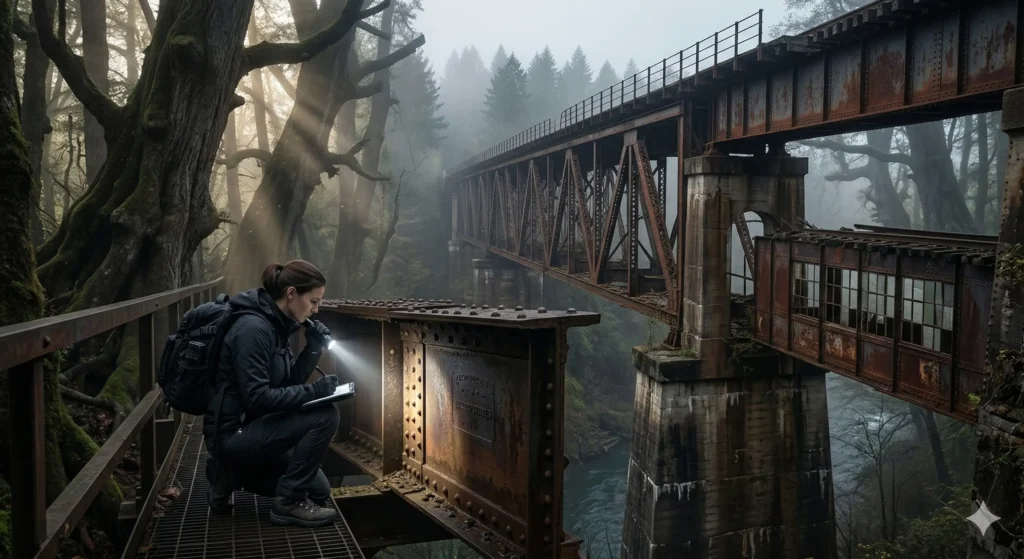
When you visit these legendary locations, your camera should focus heavily on the architectural methods used to conquer the landscape. Examine the massive hand poured concrete pillars and the thousands of rusting steel rivets holding the span together.
Every single rivet was heated in a blazing forge and hammered into place by hand while men dangled precariously over a deep river gorge. Photographing these specific engineering details grounds the supernatural myth in physical reality. It reminds your audience that human hands built these imposing structures through incredible physical sacrifice. Look for old manufacturer stamps on the steel beams or faded dates carved directly into the masonry to help guide your historical archive research.
4. The Lasting Scars of Transit Disasters
Beyond the construction phase, many of these rural structures gained their terrifying reputations following a catastrophic transit failure. A wooden trestle collapsing under the massive weight of a midnight freight train leaves a permanent traumatic scar on a small town.
Even after the wreckage is cleared away and a century passes, the cultural memory of that horrific night lingers in the surrounding community. Parents warn their children to stay away from the tracks, and over several generations, those practical safety warnings slowly mutate into stories about phantom train whistles and ghostly lanterns swinging in the dark. Your documentary work should seek to uncover the original newspaper clippings of these historical derailments to provide accurate context to the modern rumors.
5. Documenting the Somber Reality
Photographing a location with a dark historical past requires an ethical and respectful approach. You should avoid using cheap visual tricks or staging spooky elements just to satisfy the expectations of the internet ghost hunting community.
Instead, visit the location early in the morning when the natural light is soft and the surrounding forest is quiet. Let the massive scale of the engineering and the beautiful natural decay of the rusting metal speak for themselves. By treating these sites as solemn monuments to human endeavor and industrial tragedy, you elevate your photography from sensationalism to genuine historical preservation.
Conclusion
Uncovering the real history in your own region is a deeply rewarding exercise. When we strip away the supernatural rumors, we are left with powerful stories of human ambition, dangerous labor, and the relentless march of industrial progress.
Over to you: Is there a famous scary bridge or a haunted tunnel in your hometown? What is the real historical truth behind the local legend? Let us know in the comments below!