
Category: The Lab (Gear) | Reading Time: 7 Minutes
Building a comprehensive urban exploration first aid kit is the final and arguably most important step in preparing your gear loadout. When you are deep inside an abandoned asylum or miles underground in a forgotten drainage tunnel, you are completely isolated from traditional emergency services. This equipment analysis covers the essential medical supplies you must carry to stabilize severe injuries until professional help can finally arrive.
1. The Reality of Remote Medical Emergencies
You must shift your mindset away from relying on a rapid ambulance response. If you suffer a severe laceration while exploring a decaying power plant, paramedics cannot simply drive up to your exact location. They will have to navigate locked gates, structurally compromised floors, and massive debris piles just to reach you. During this prolonged waiting period, you and your exploration partner are the only active first responders. Your medical kit must be robust enough to handle severe physical trauma rather than just minor scrapes and shallow bruises.
2. Bleeding Control and Severe Trauma
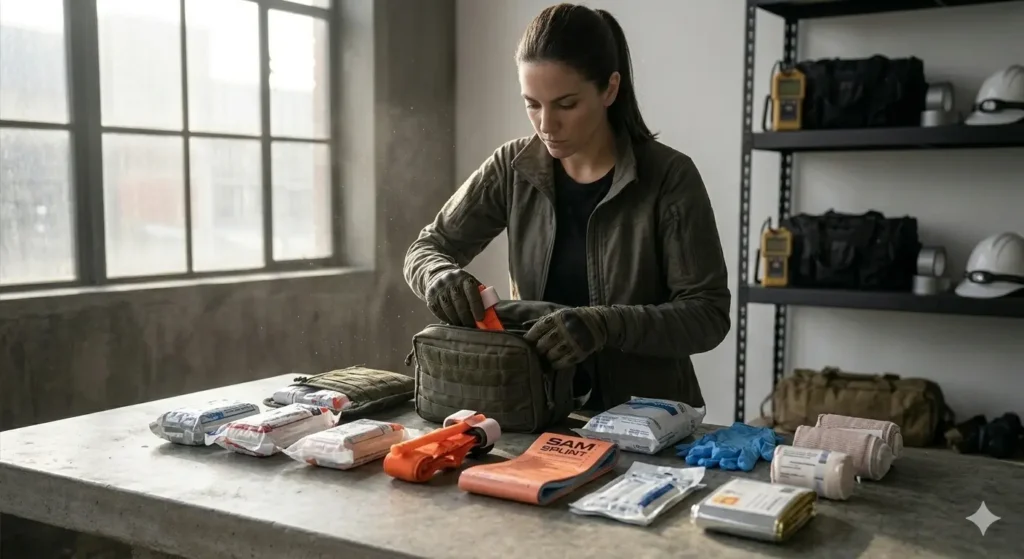
The most significant physical threat in any ruined building is incredibly sharp debris. Shattered window glass, jagged sheet metal, and rusted iron rebar are hiding in every single dark corner. Therefore, your primary focus must be severe bleeding control. You need to pack multiple rolls of sterile gauze and highly absorbent trauma dressings. Furthermore, carrying a legitimate combat application tourniquet is an absolute necessity. A tourniquet can literally save your life if you accidentally sever a major artery on a piece of hidden glass, but you must seek professional training to learn how to apply it correctly before you ever need it in the field.
3. Chemical Exposure and Eye Protection
Industrial ruins are frequently heavily contaminated with unknown toxic substances. If you brush up against a leaking barrel of old industrial solvent or disturb a massive nest of stinging insects, you need immediate medical relief. Your kit should include plenty of sterile saline pods to aggressively flush hazardous chemicals or blinding drywall dust out of your eyes. Additionally, pack several pairs of thick nitrile examination gloves to protect your own hands while you are cleaning a dirty and infected wound for your injured exploration partner.
4. Managing Sprains and Broken Bones
Navigating undocumented structures requires walking across highly unstable and totally uneven surfaces. A sudden collapse of a rotting wooden floorboard can easily result in a severely twisted ankle or a fractured leg bone. To manage these painful mobility injuries, you must carry a wide elastic compression bandage to securely stabilize the damaged joint. A lightweight moldable aluminum splint is also an incredible addition to your backpack. This versatile piece of equipment can completely immobilize a broken forearm, preventing further internal tissue damage while you slowly evacuate the dangerous environment.
5. Environmental Survival Additions
A medical emergency in an abandoned building often forces you to remain completely stationary for several hours while waiting for a technical rescue team. Basements and concrete bunkers are incredibly cold and damp, even in the middle of the summer heat. You must pack a reflective emergency thermal blanket to wrap around an injured partner to prevent clinical shock and deadly hypothermia. Finally, include basic medications like pain relievers and powerful antihistamines to manage sudden allergic reactions to the massive amounts of toxic mold and dust present in every decaying room.
Conclusion
A professional medical loadout is not a luxury item. It is a fundamental requirement for ethical and responsible documentation. By preparing for the absolute worst case scenarios and carrying the correct trauma supplies, you ensure that a sudden accident does not become a fatal tragedy. Always remember that possessing the gear is only half the battle. You must also invest the time to learn exactly how to use every single item inside your kit properly.
Over to you: Have you ever needed to use your medical supplies during an expedition? Do you prefer to build your own custom kit or buy a prepackaged trauma bag? Share your thoughts in the comments below!