
Category: The Unseen | Reading Time: 9 Minutes
There is a powerful and unsettling connection between modern ruins and the strange world of cryptid urban exploration folklore. When a massive building fails and is reclaimed by the surrounding forest, it creates a unique liminal space where the known rules of civilization no longer apply. These abandoned locations often become the epicenter for terrifying reports of mysterious creatures, flying anomalies, and impossible monsters.
The most famous example is the relationship between the decaying TNT factory ruins in West Virginia and the enduring legend of the Mothman. This field analysis explores the cultural and historical reasons why decaying industrial infrastructure serves as the perfect psychological catalyst for our modern monster myths.
1. The Architecture of the Void
To understand cryptid urban exploration folklore, you must first analyze the unique architecture of decay. An abandoned structure is a massive physical void in the middle of a functional landscape. The collapsing roof, the broken windows, and the rusting machinery all represent a failure of human control and the relentless advance of wild chaos.
When people approach these locations at twilight, their minds are already primed for fear and apprehension. The massive industrial shapes look entirely alien in the darkness. The human brain, which is wired for pattern recognition, looks at a sagging piece of torn tarpaulin flapping in the wind and mistakenly perceives a massive winged creature. This psychological phenomenon, known as pareidolia, is the foundation for thousands of convincing monster sightings.
2. Contamination as a Mythological Catalyst
Many of our most potent modern legends arise directly from the industrial pollution left behind in these abandoned zones. When a site like the West Virginia TNT facility is revealed to have severe chemical contamination or radioactive fallout, it creates deep societal anxiety.
Cryptid urban exploration folklore often serves as a metaphorical expression of this real environmental terror. The local legend of a monstrous entity lurking in the poisoned water or the toxic woods is a psychological projection of the community’s fear of the unseen poison. It is much easier to give that abstract fear a monstrous physical form than it is to accept the complex and terrifying reality of invisible chemical carcinogens permanently seeping into the local water table.
3. The Power of Undocumented History
Many of these monster sightings occur in extremely isolated locations that lack proper historical documentation. When a ruin is hidden deep in the wilderness without a single plaque or record detailing its original purpose, the surrounding community must invent a cultural history for the site.
If a sprawling concrete complex appears mysteriously in the woods, the neighbors will naturally theorize that it was a secret government genetics laboratory or a clandestine occult research facility. This fabricated history provides a perfect origin story for whatever strange creature is subsequently reported on the property. The void of real history is quickly filled by a terrifying fictional narrative that becomes an enduring part of the regional identity.
4. Documenting the Atmosphere, Not the Monster
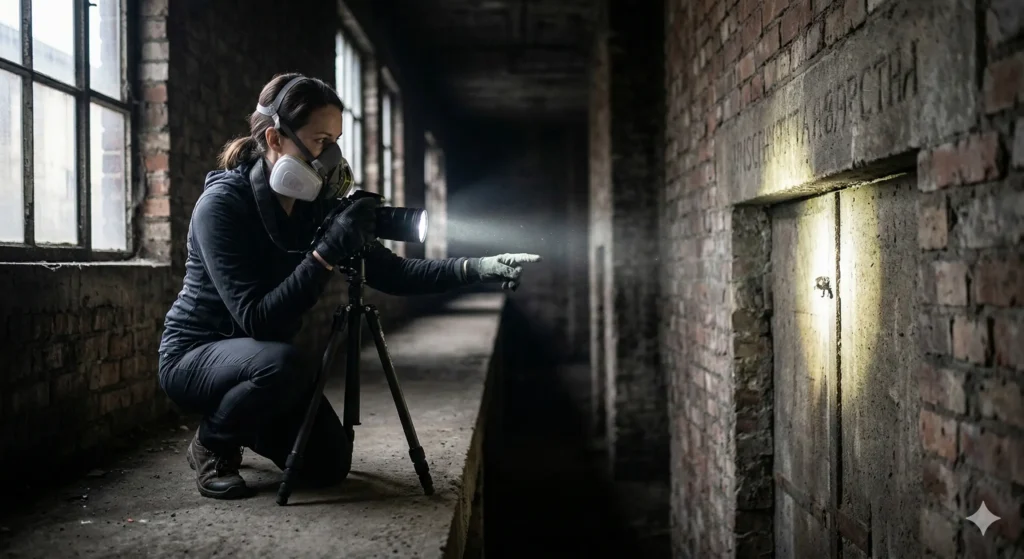
As a respectful historical documentarian, your camera work should focus entirely on capturing the somber atmosphere that inspires these powerful myths. You are not there to fake evidence of a ghost or a mutant creature.
Instead, photograph the oppressive scale of the decaying machinery. Capture the beautiful and frightening way that nature is slowly crushing the reinforced concrete. The true story is found in the relentless decay and the visible scars of industrial exploitation. By presenting the physical reality of the site with stark authenticity, you provide a realistic visual context that allows your audience to understand why the local folklore turned this grim historical location into a terrifying home for a monster.
Conclusion
Cryptid urban exploration folklore is not about proving the existence of monsters. It is about understanding the human relationship with failure, decay, and the unknown. These spooky stories are powerful cultural artifacts that reveal how deeply we fear environmental contamination and the loss of historical memory. By documenting the physical ruins responsibly, we honor the real history while respecting the compelling urban legends that keep these forgotten locations alive in our cultural imagination.
Over to you: Is there a famous monster reported near an abandoned site in your region? Do you think the decay itself created the myth, or is there a true historical tragedy buried beneath the legend? Share your local cryptid stories in the comments below!