
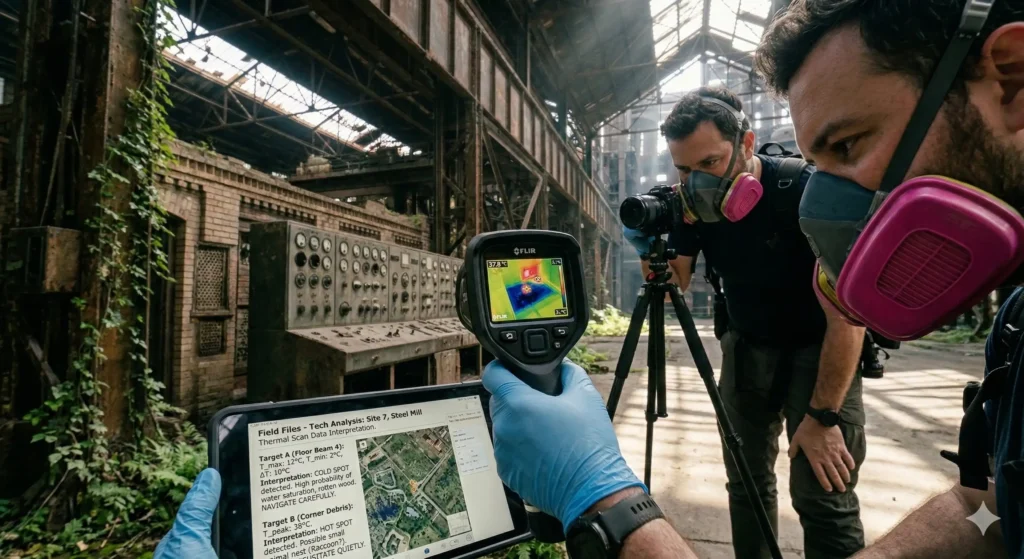
Hello again and welcome back to the Tech Analysis category. Today we are exploring a highly advanced piece of professional exploration technology. We are talking about thermal imaging cameras. These fascinating tools are often misunderstood or solely associated with paranormal television shows but they are actually incredibly useful for assessing the safety and environmental conditions of a historical building. Before we dive into our expert field tested evaluations we want to remind everyone that our team only operates in locations where we have secured official written permission. Operating legally ensures we can focus entirely on creating high quality original content while protecting the preservation status of these amazing sites.
Enhancing Risk Management and Structural Safety Understanding the true value of thermal imaging starts with risk management. When you step inside a decaying structure the hazards are not always visible to the naked eye. Our recent field tested evaluations proved that thermal imaging can help you spot hidden moisture behind plaster walls and under floorboards. Water intrusion is the primary cause of structural decay. By reading the temperature differences on your camera screen you can easily identify areas where cold water has saturated the wood. This is crucial information because wet wood often means rotten beams and unstable floors. By mapping out these cold spots you can navigate the environment safely and avoid potentially catastrophic accidents.
Detecting Wildlife and Environmental Responsibility Another fantastic benefit of using thermal imaging cameras is the ability to detect wildlife. Abandoned buildings are almost never truly empty. Birds raccoons feral cats and even bears often use these forgotten spaces for shelter. Startling a wild animal in a dark enclosed space is dangerous for both you and the creature. A quick scan of a dark room with your thermal imaging device will instantly reveal the glowing heat signature of any animals hiding in the debris. This allows you to practice true environmental responsibility by quietly backing away and leaving the wildlife completely undisturbed.
Selecting the Right Device for Your Needs When you decide to purchase one of these tools you will notice a wide range of options on the market. We recommend avoiding cheap smartphone attachments and investing in a dedicated standalone unit. Look for a device with a high resolution infrared sensor and a durable weather resistant casing. You want a tool that can survive the harsh dusty and damp environments of a forgotten factory. Battery life is also extremely important so ensure the model you choose has rechargeable batteries that can last for several hours of continuous technical data analysis. True environmental responsibility means bringing reliable gear that will not break and become hazardous electronic waste.
Interpreting the Technical Data Analysis Interpreting the technical data analysis provided by your camera does take a bit of practice. When you first look at the screen you will see a variety of bright colors representing different heat signatures. It is important to understand that these cameras measure surface temperatures not the actual air temperature. We highly recommend spending time practicing with your device in a controlled environment before taking it into the field. Learn how to adjust the color palettes and understand the gradient scales. Once you master the interface it becomes second nature and it will dramatically change how you perceive and explore these historical spaces.
Incorporating Thermal Data into Photographic Studies Finally incorporating thermal imaging into your regular photographic studies adds a completely new layer to your historical documentation. You can capture fascinating images that show exactly where a building is losing heat or where the original insulation has completely failed. These unique photographs provide incredible educational value to architectural historians and local preservation societies. It is a brilliant way to merge technical data analysis with artistic expression.
Conclusion In conclusion a thermal imaging camera is a phenomenal investment for anyone serious about safe and thorough historical documentation. It elevates your risk management protocols and helps you understand the hidden dynamics of a decaying structure. We hope this instructional guide provides you with a clear understanding of why we consider this tool an absolute necessity. Please let us know in the comments below if you have ever used a thermal camera during your own legally permitted explorations.