
Category: Field Files | Reading Time: 9 Minutes
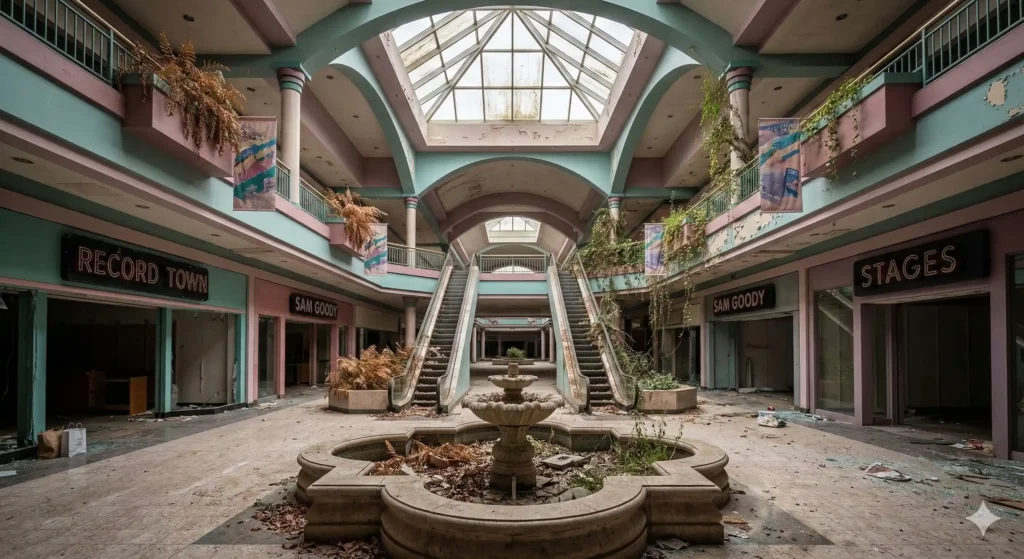
There is a surreal and echoing quiet that fills the corridors of abandoned shopping malls. Once the bustling epicenter of suburban American life, these massive retail complexes now sit completely empty. The cascading fountains have run dry, the neon signs are dark, and the polished tile floors are covered in dust and shattered glass.
This field file examines the incredible rise and the inevitable decay of the classic indoor retail center. We will explore the architectural intentions behind their creation, the economic forces that brought them down, and the haunting beauty they provide for urban explorers today.
1. The Birth of the Indoor Metropolis
To understand why these structures are failing, we must first look at why they were built. In the years following World War II, the American landscape changed dramatically. Families moved away from crowded city centers and into sprawling new suburbs. However, these new neighborhoods lacked a central community gathering space.
An architect named Victor Gruen wanted to fix this problem. He envisioned a climate controlled indoor town square where people could shop, eat, and socialize safely away from traffic and bad weather. When the first fully enclosed retail center opened in the 1950s, it was a massive success. It sparked a construction boom that would physically reshape the American suburbs for the next fifty years.
2. The Golden Age of Consumer Culture
By the 1980s and 1990s, the mall was no longer just a place to buy clothes. It was the ultimate social destination. It was an enclosed fantasy world of endless consumerism.
Teenagers spent their weekends wandering between the arcade, the movie theater, and the sprawling food courts. Developers continually tried to outdo each other by building indoor roller coasters, massive ice skating rinks, and multi story glass elevators. For decades, it seemed like this golden age of retail would never end. The parking lots were always full, and the cash registers never stopped ringing.
3. The Catalyst of the Retail Apocalypse
The decline of these retail giants was not caused by a single event. It was a slow and painful combination of changing consumer habits, economic recessions, and massive corporate debt.
The most obvious factor was the rapid rise of online shopping. As internet retailers began offering cheaper prices and free two day shipping, consumers realized they no longer needed to drive across town and fight for a parking space. Furthermore, real estate developers simply built too many properties. In many suburban areas, competing retail centers were constructed only a few miles apart, cannibalizing each other for the same shrinking pool of customers.
4. The Anchor Store Domino Effect
The financial survival of abandoned shopping malls was almost always tied to their anchor stores. These were the massive, multi level department stores located at the far ends of the concourse. They paid the bulk of the rent and drew in the massive crowds that kept the smaller boutique shops alive in the middle corridors.
When giant department store chains began filing for bankruptcy and closing their doors, the entire ecosystem collapsed. Without the heavy foot traffic from the anchor stores, the smaller shops could no longer afford their leases. This triggered a devastating domino effect. As more stores boarded up their windows, the property became less attractive to shoppers, which caused even more stores to leave. The property would eventually fall into a death spiral until the owners were forced to lock the doors for good.
5. Capturing the Dead Mall Aesthetic
For the architectural photographer, documenting abandoned shopping malls is a journey into recent nostalgia. Unlike a factory from the 1800s, these spaces feel deeply familiar to anyone who grew up in the late twentieth century.
You often find perfectly preserved pastel color palettes, geometric skylights, and dusty escalators frozen in time. Plants that were originally placed in decorative indoor planters sometimes break free, growing wildly toward the natural light leaking through the glass ceilings. Photographers refer to this specific aesthetic as vaporwave or liminal space photography. It captures the eerie feeling of standing in a massive public space that was specifically designed for thousands of people but is now entirely devoid of human life.
Conclusion
The era of the indoor retail palace is quickly coming to a close. While some have been successfully repurposed into medical centers or community colleges, many others face the wrecking ball. Documenting these properties allows us to preserve the memory of an incredibly specific time in American cultural history.
Over to you: Do you have a local mall that has closed down in recent years? What were your favorite stores to visit when it was still open? Share your memories with us in the comments section below!