
Hello again and welcome back to the Field Files category. Today we are bringing you our latest photographic study focusing on the architectural beauty of an abandoned theater. We are thrilled to share the structural history and preservation status of this magnificent entertainment hub. As always we want to emphasize that our team secured official written permission from the property owners before entering the premises. We operate strictly within the law and advocate for safe legal exploration to ensure these fragile locations are protected. Creating original and legally compliant content is the cornerstone of our platform.
Entering a Forgotten Era of Glamour Walking through the main entrance of this 1920s movie palace is a breathtaking experience. The grand lobby immediately transports you to a bygone era of glamour and artistry. Even though the building has been closed for decades you can still see the intricate peeling gold leaf on the ceiling and the sweeping curves of the grand staircases. Our primary goal during this visit was historical documentation. We want to capture the essence of what this theater meant to the community before time and decay erase it completely. The craftsmanship of the early twentieth century is evident in every corner of the room.
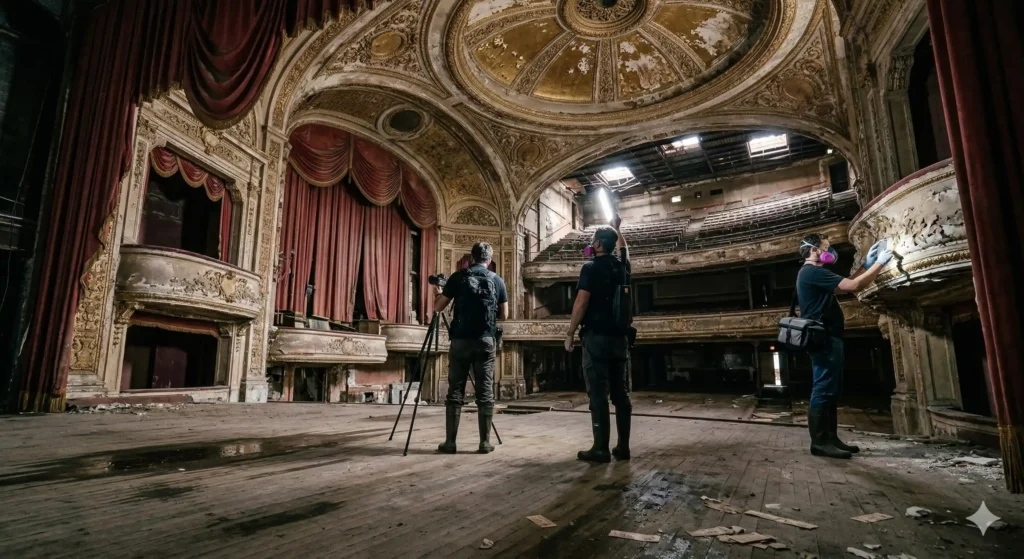
Photographing the Grand Auditorium The auditorium itself is a masterpiece of design. The massive stage is framed by fading red velvet curtains that have somehow survived the elements and the passage of time. We spent hours photographing the ornate plaster details along the walls and the crumbling balconies that once held hundreds of excited moviegoers. It is incredibly moving to stand in the center of the room and imagine the sounds of laughter and music that once filled the space. By creating these detailed photographic records we are helping to preserve the cultural memory of the city for future generations to study and appreciate.
Technical Approaches for Indoor Architectural Photography For the photography enthusiasts reading this post capturing the beauty of a dark cavernous theater requires specific techniques. We relied entirely on sturdy tripods to take long exposure shots. The natural light was very limited so we had to be highly strategic with our camera settings. We used wide angle lenses to capture the sheer scale of the auditorium ensuring we included the beautiful ceiling domes and the sweeping balconies in a single frame. When we needed to highlight specific architectural details like the intricate carvings on the ticket booth we used gentle external floodlights. We were very careful to use lighting techniques that provide clear high quality images without washing out the natural shadows that give the space its haunting character.
Risk Management and Safety Protocols Safety and risk management are always our top priorities during these visits. The environment inside an old theater can be unpredictable and potentially dangerous. The wooden floors near the stage had significant water damage making them structurally unsafe in certain areas. We wore thick protective boots and carefully tested every step before putting our full weight down. We also wore high quality masks to protect our lungs from dust and airborne particles that accumulate in enclosed forgotten spaces. We strongly encourage everyone to prioritize their health and safety above all else. Never explore alone and always assess your environment carefully before moving forward.
Upholding the Leave No Trace Philosophy Furthermore we strictly adhere to the Leave No Trace philosophy. We are observers and archivists not souvenir hunters. We left every old ticket stub and broken piece of plaster exactly where we found it. Removing items from a historical site destroys the context for future historians and ruins the experience for the next photographer. True environmental responsibility means respecting the decay and ensuring the building remains untouched by our presence. We also deliberately keep the exact location private to protect the theater from potential vandalism or unauthorized entry.
Conclusion Documenting the changing landscapes of America is a profound privilege. Buildings like this abandoned theater are monuments to our shared cultural history. They deserve to be remembered respected and documented with the utmost care. We hope our in depth documentation inspires you to appreciate the hidden architectural treasures in your own community. Please share your thoughts in the comments below and let us know what aspects of structural history you find most fascinating.