
Hello fellow explorers and welcome to another edition of Field Files. Today we are sharing our photographic study of an incredible piece of American history. We recently received official permission to document a massive steel mill that closed decades ago. Walking into this architectural giant feels like stepping back in time. We want to share the structural history and industrial evolution of this magnificent site with you while strictly adhering to safety and legal guidelines. Creating unique and genuine content is our top priority because it provides real value to our readers.
Stepping Back into Industrial History The first thing you notice when you approach the property is the sheer scale of the building. The towering ceilings and massive rust covered beams tell a story of an era when steel was the backbone of the country. Our goal is always historical documentation. We want to capture the preservation status of these changing landscapes before they are gone forever. We worked closely with the local historical society to gain lawful entry ensuring our visit was completely compliant with property regulations. Operating legally and avoiding any trespassing is essential to our community and ensures we respect the rights of others.
Once inside the silence is almost overwhelming. A century ago this place would have been deafening. The roar of the furnaces the shouting of the workers and the grinding of heavy machinery would have filled the air. Now there is only the sound of our footsteps echoing off the concrete floor. We spent the first hour simply walking the perimeter absorbing the atmosphere and planning our photographic approach. The natural light filtering through the broken skylights created a beautiful scene.
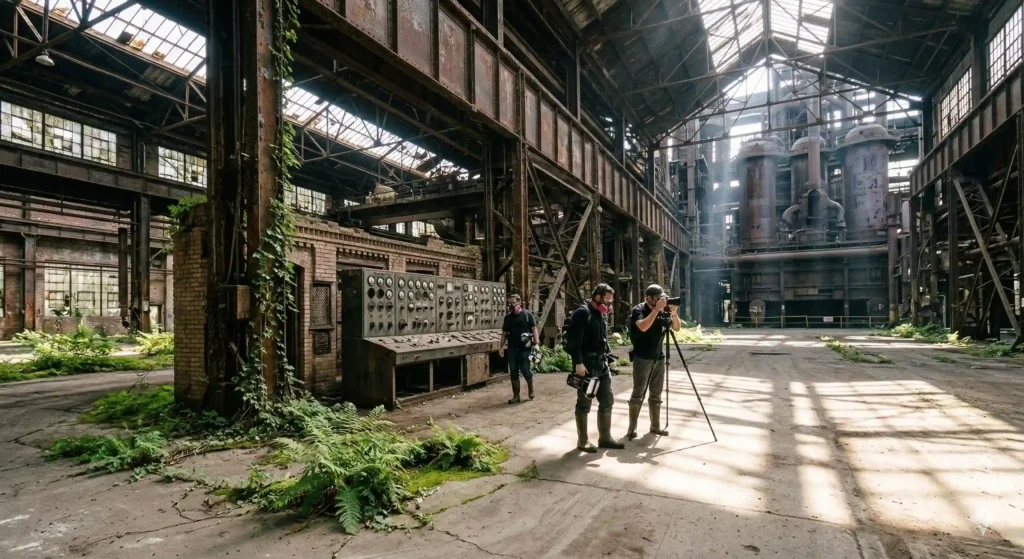
The Architectural Details Left Behind Our photographic study focused heavily on the forgotten architectural details. We found original control panels covered in layers of dust with dials and switches frozen in time. The intricate brickwork surrounding the blast furnaces is a testament to the craftsmanship of the early twentieth century. It is fascinating to see how these functional industrial spaces were built with such attention to detail. We took countless photos of these textures blending the rough rust with the smooth glass and weathered wood. We always use original photos that we have taken ourselves to ensure our content remains entirely original.
Photography Techniques for Dark Spaces For the fellow photography enthusiasts reading this we want to share a bit about our technical approach. Capturing the essence of a dark cavernous space requires patience and the right equipment. We relied entirely on our sturdy tripods because long exposures were absolutely necessary. We set our cameras to a low ISO to minimize digital noise which is crucial when photographing dark shadows. Most of our wide shots were taken at a narrow aperture to ensure everything from the immediate foreground to the distant blast furnaces remained in sharp focus. We used the ambient light filtering through the roof for our primary illumination but occasionally we utilized our high performance flashlights to highlight specific mechanical details. This technique known as light painting allowed us to bring attention to the beautifully crafted control panels without washing out the natural shadows. Building a trustworthy site requires deep and validated personal expertise which is why we share these technical guides.
Nature Reclaiming the Concrete Nature is slowly reclaiming the property. Ferns and moss grow through the cracks in the concrete floor. Vines climb the rusted steel columns reaching toward the sunlight above. This intersection of human industry and natural resilience is one of my favorite things to capture. It reminds us that everything we build is temporary. We made sure to leave no trace of our visit. We did not move any objects or clear any vines. We documented the site exactly as we found it preserving its integrity for future historians.
Safety and Legal Compliance Safety was a major priority during this exploration. Industrial sites are filled with hazards. We wore heavy duty boots to protect against sharp debris and carried advanced lighting equipment to illuminate the darkest corners of the mill. We also wore respirators to ensure we did not inhale any dangerous particles. It is crucial to remember that no photograph is worth risking your life. Always assess the structural integrity of a building and never take unnecessary risks. Furthermore we never share exact locations publicly to protect these fragile sites from vandalism.
Preserving Our Cultural Heritage You might wonder why we spend our time photographing these decaying structures. It comes down to preserving our cultural and industrial heritage. These mills were the lifeblood of their communities. They provided jobs supported families and built the cities we live in today. When these buildings are demolished or left to collapse a significant chapter of our collective history vanishes. By creating these detailed photographic records we are archiving a way of life that no longer exists. We share these images with local historical societies and educational institutions to ensure the memories of these workers are not forgotten.
Conclusion Thank you for joining us on this educational journey through the forgotten steel mill. We hope our documentation inspires you to look closer at the industrial history in your own region. Remember to always explore safely legally and respectfully. Leave a comment below and let us know what kind of historical architecture you would like us to document next.