
Category: Beginner Guides | Reading Time: 5 Minutes
We often romanticize the decay. We look at a peeling wall and see texture; we look at a collapsed roof and see dramatic lighting. But to an engineer or a doctor, that same building is a biological and structural nightmare.
Abandoned buildings are actively dying. They are decomposing. And just like a decomposing body, they release toxins, bacteria, and dangers that can hurt you long after you have left the property.
If you are going to explore, you need to know exactly what is waiting for you in the dark. These are the three “Silent Killers” of urban exploration.
1. Structural Instability: The Floor is a Lie
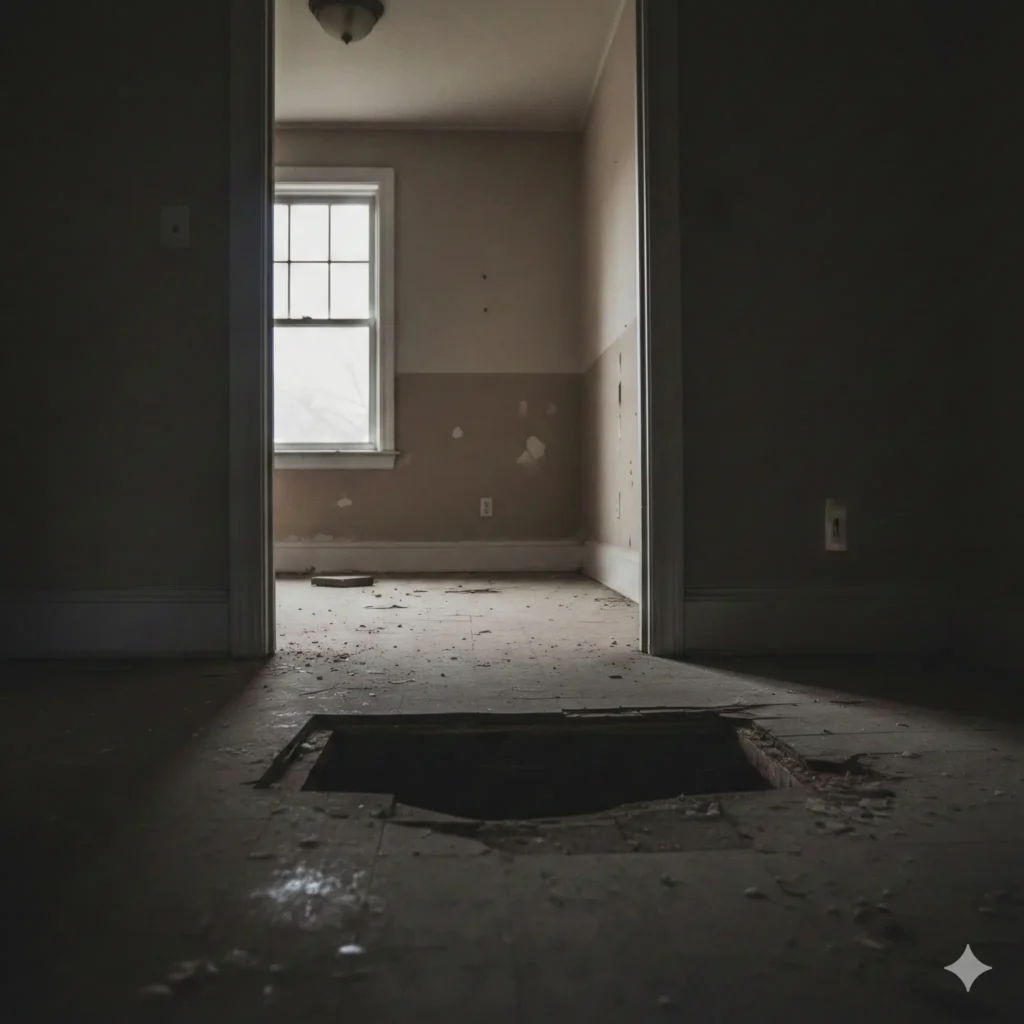
The most immediate threat in any abandoned structure is gravity.
Water is the enemy of architecture. Once a roof leaks, water soaks into the wooden beams and floorboards. Over ten or twenty years, that wood turns into something resembling a wet sponge. It might look solid, but it will crumble under the weight of a human boot.
The “Soft Floor” Test: Never trust a wooden floor. Before you commit your full weight to a step, test it.
- Look for sagging: If the floor dips in the middle of the room, stay near the walls (where the support beams are strongest).
- Watch for water stains: If the ceiling above you has water damage, the floor below you is likely compromised.
- The Bounce: If the floor feels “bouncy” or spongy, retreat immediately.
2. The Invisible Killer: Asbestos
If the building was constructed before 1980, assume it is full of asbestos.
Asbestos was used in everything: floor tiles, pipe insulation, ceiling tiles, and drywall. When it sits undisturbed, it is relatively safe. But in an abandoned building, vandals smash walls and ceilings collapse. This releases microscopic asbestos fibers into the air.
Why it’s dangerous: You cannot smell or taste asbestos. When you breathe it in, the fibers hook into your lungs and never leave. Decades later, this can cause Mesothelioma (a fatal cancer).
The Rule:
- Never kick up dust. Walk softly.
- Wear a Respirator. A simple cloth mask is not enough. You need a P100 or N95 rated respirator to filter out particulate matter.
- Avoid “Popcorn” Ceilings: If the insulation looks like fluffy white cotton or the floor tiles are 9×9 inches, do not touch them.
3. Biological Hazards: Mold and “Guano”
Damp, dark buildings are the perfect breeding ground for Black Mold (Stachybotrys chartarum).
Inhaling high concentrations of mold spores can cause immediate respiratory distress, brain fog, and long-term lung infections. If a room smells overwhelmingly musty or earthy, that is your lungs warning you to leave.
The Bird Problem (Histoplasmosis): Pigeons and bats love abandoned buildings. Their droppings (guano) pile up on floors and attics. When this dry poop is stepped on and turns to dust, it releases a fungus that causes Histoplasmosis—a severe lung infection that mimics tuberculosis.
Safety Tip: If you see piles of bird droppings, put your mask on immediately and do not walk through it if you can avoid it.
4. Tetanus and “Sharps”
It is almost impossible to explore a factory without scraping against metal.
Rusty nails, jagged glass, and exposed rebar are everywhere. A deep cut from a rusty piece of metal can introduce Tetanus bacteria into your bloodstream.
- Check your shots: Ensure your Tetanus booster is up to date (usually every 10 years).
- Wear thick gloves: Tactical gloves are not just for style; they protect your hands when you grab a doorframe covered in glass shards.
- Watch your step: Needles and “sharps” from drug use are common in accessible abandoned spots. Wear boots with thick soles (puncture-resistant if possible).
Conclusion
We do not list these hazards to scare you away from exploring. We list them so you can prepare.
The difference between a reckless trespasser and a professional explorer is preparation. The professional wears a respirator, watches their step, and respects the fact that the building is dangerous.
Gear Check: Do you have your respirator and first aid kit? If not, check “The Lab” before your next trip.