
Category: Tech Analysis | Reading Time: 9 Minutes
Traditional cameras are designed to capture the exact same spectrum of visible light that the human eye can see. However, there is an entire world of invisible electromagnetic radiation bouncing off the walls of every abandoned building you visit.
Using an infrared urban exploration photography setup allows you to peel back the curtain and capture this hidden spectrum. This technical analysis explores the fascinating process of converting a standard digital camera into an infrared sensor. We will discuss the surreal visual effects this technology creates and how it can completely transform your portfolio of decaying architecture.
1. The Science of the Infrared Spectrum
The light we see every day represents only a tiny fraction of the electromagnetic spectrum. Just beyond the deep red light that our eyes can detect lies the infrared band. While we cannot see it, we can often feel it as radiant heat.
Digital camera sensors are actually highly sensitive to this invisible light right out of the factory. To prevent this invisible radiation from muddying the colors of normal photographs, manufacturers install a physical piece of glass directly over the sensor to block it completely. To shoot true infrared images, a specialized technician must physically disassemble the camera, remove that blocking glass, and replace it with a new filter that only allows invisible light to pass through.
2. The Surreal Visual Aesthetic
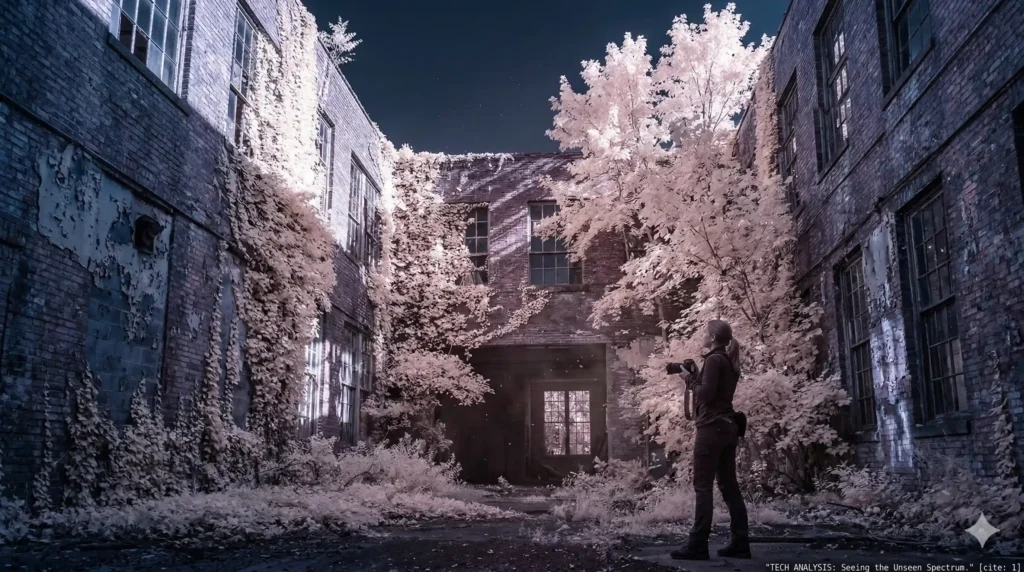
When you take an infrared urban exploration photography rig into the field, the results are immediately jarring and incredibly beautiful. Because different materials reflect invisible light differently than visible light, the entire color palette of the world is dramatically altered.
The most famous visual anomaly is known as the Wood Effect, named after the physicist who first documented it. Healthy green foliage reflects massive amounts of infrared radiation. Therefore, any ivy growing up the side of a decaying brick factory will appear glowing white or surreal bubblegum pink depending on your specific glass filter. Meanwhile, blue skies absorb the light and render as deep space black. This creates a haunting, dreamlike atmosphere that makes an overgrown asylum look like an alien landscape.
3. Choosing the Right Conversion Filter
If you decide to modify an old camera body, you must choose the specific nanometer wavelength of your new filter. This choice dictates exactly how much visible light is allowed to mix with the invisible spectrum.
A standard seven hundred and twenty nanometer filter is the most popular choice for beginners. It allows just enough visible light to pass through to create stunning false color images with those iconic glowing white trees and dark skies. If you want a purely monochromatic look with intense architectural contrast, you might choose an eight hundred and fifty nanometer filter. This completely blocks all visible light, resulting in incredibly crisp black and white photographs that highlight the rough textures of peeling paint and shattered concrete perfectly.
4. Technical Challenges in the Field
Shooting invisible light introduces several unique technical hurdles. First, your camera light meter will be completely confused because it is calibrated strictly for human vision. You must learn to read your digital histogram constantly to ensure you are not overexposing the glowing highlights of the foliage.
Second, many modern lenses suffer from a severe defect known as a hot spot when shooting in this spectrum. A hot spot is a bright, washed out circle that ruins the direct center of your photograph. This is caused by internal anti glare coatings bouncing the invisible light around inside the lens barrel. Before you invest in a conversion, you must research your specific lenses online to ensure they perform well under these strange lighting conditions. Additionally, autofocus systems can sometimes struggle because invisible wavelengths focus at a slightly different physical plane than visible light. You may need to rely on manual focus adjustments to keep your architectural details perfectly sharp.
5. The Intensive Editing Process
An infrared raw file looks absolutely terrible straight out of the camera. It usually appears as a flat, muddy red image lacking any real contrast. The true magic happens during post processing on your desktop computer.
To achieve the classic false color aesthetic, you must perform a technique called a channel swap in your editing software. This involves literally reversing the red and blue color channels. Once swapped, the dark red sky becomes a beautiful rich blue, and the muddy foliage turns into a vibrant white or yellow. You then use selective color adjustments to fine tune the exact hue of the brickwork and the rusting steel. This editing workflow requires patience and a deep understanding of color theory, but mastering it allows you to create architectural art that stands entirely apart from traditional photography.
Conclusion
Infrared urban exploration photography completely reinvents how we perceive abandoned spaces. It forces the photographer to see beyond the obvious decay and anticipate how different materials will react to invisible light. While the camera conversion process is an investment, the ability to turn a standard overgrown ruin into a surreal masterpiece is well worth the technical effort.
Over to you: Have you ever experimented with false color editing or shot with a modified camera body? Share your thoughts on this surreal aesthetic in the comments below!