
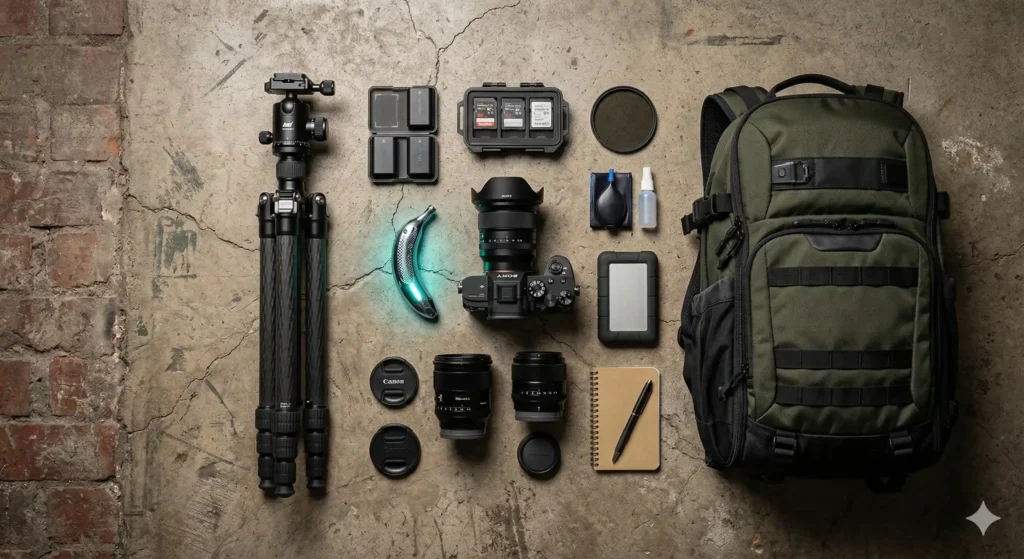
Hello fellow photographers and welcome back to The Lab Gear category. Today we are going to discuss exactly how to build the perfect exploration photography kit for your historical documentation projects. Whether you are stepping into a legally permitted old theater or an incredibly massive industrial factory having the right tools is absolutely essential. We always remind our community that we only document locations where we have secured official written permission from the property owners. Operating legally ensures we remain safe and respectful while capturing beautiful original images. Capturing your own original photos is also a crucial step in maintaining a high quality website that provides real value to your readers.
Why You Need a Specialized Exploration Photography Kit You might be wondering why you cannot simply use your smartphone or a basic point and shoot camera. The truth is that documenting forgotten architectural sites requires a very specialized exploration photography kit. These environments are notoriously difficult to photograph. They often lack natural light they are filled with harsh shadows and the physical scale of the rooms can be overwhelmingly large. A specialized kit allows you to overcome these environmental challenges and produce professional grade imagery that truly captures the preservation status of the building.
Selecting the Best Camera Body The foundation of any great exploration photography kit is the camera body itself. We highly recommend investing in a full frame mirrorless camera or a high quality digital single lens reflex camera. Full frame sensors are incredibly important because they perform exceptionally well in low light conditions. When you are standing in a dark basement or a boarded up auditorium you need a sensor that can capture as much ambient light as possible without introducing heavy digital noise into your images. Additionally look for a camera body that features weather sealing. You will often encounter dust moisture and dripping water inside these decaying structures so your gear needs to be tough enough to survive the elements.
Essential Lenses for Your Exploration Photography Kit Once you have chosen your camera body you need to select the right glass. A versatile exploration photography kit should always include an ultra wide angle lens. A wide angle lens allows you to capture the massive scale of an industrial site or the sweeping grandeur of a forgotten hotel lobby in a single frame. We typically recommend a lens in the sixteen to thirty five millimeter range. Furthermore it is incredibly wise to carry a fast prime lens such as a fifty millimeter lens with a very wide aperture. This allows you to take beautiful detailed shots of small artifacts peeling paint and intricate architectural textures while creating a soft blurred background.
The Importance of a Reliable Tripod Perhaps the most overlooked component of an exploration photography kit is the tripod. Because you will be shooting in environments with very little natural light you will need to use long exposure photography techniques. If you attempt to hold the camera in your hands during a long exposure the resulting image will be completely blurry. A sturdy heavy duty tripod is completely non negotiable. Look for a tripod made of carbon fiber because it offers the perfect balance of incredible stability and lightweight portability. You will be carrying this gear over uneven terrain and up crumbling staircases so saving weight wherever possible is a smart risk management strategy.
Protecting Your Gear from the Elements Your exploration photography kit is a significant financial investment so you must protect it carefully. We never bring our gear into the field using standard canvas bags. Instead we use rugged weather resistant backpacks designed specifically for outdoor adventure photography. These backpacks feature padded compartments that keep your delicate lenses safe from accidental impacts while you climb over debris. Additionally always carry plenty of microfiber cloths and a manual air blower to safely remove corrosive dust from your camera sensor. True environmental responsibility extends to taking care of your own equipment so you leave no trace and take nothing but pristine photographs.
Adding Lighting Tools to Your Exploration Photography Kit Finally you must integrate high performance lighting into your exploration photography kit. We discussed lighting extensively in our Tech Analysis category but it bears repeating here. You need reliable floodlights to gently illuminate dark corners and highlight the structural history of the rooms you are documenting. A dedicated photography light panel allows you to control the color temperature matching it to the natural light filtering through the broken windows.
Conclusion In conclusion assembling a professional exploration photography kit takes time and careful consideration. By selecting the right camera body versatile lenses a sturdy tripod and proper protective bags you empower yourself to capture breathtaking images of our changing landscapes. We hope this comprehensive guide helps you prepare for your next legally permitted documentation project. Please leave a comment below and let us know what piece of gear is your absolute favorite to use in the field.