
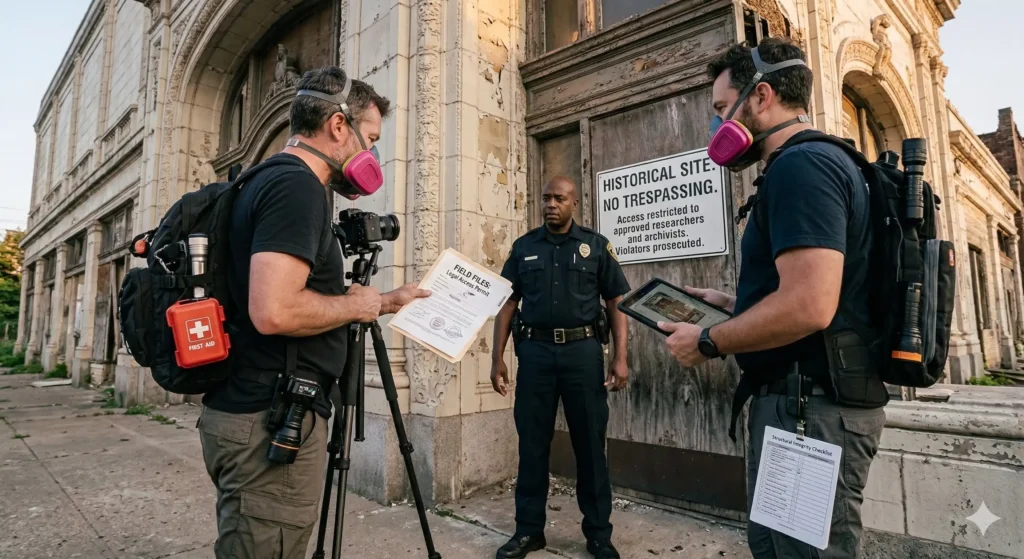
Hello everyone and welcome to the Safety and Ethics category. Today we are addressing the most critical aspects of our documentation work which are legal compliance and risk management. As we explore forgotten architectural sites we must always prioritize safety and strictly adhere to the law. Promoting illegal activity or trespassing is completely against our community values and violates essential online content guidelines. This article will serve as your foundational guide for conducting safe educational and fully legal historical documentation.
The Absolute Necessity of Legal Compliance First and foremost you must always obtain explicit written permission before entering any abandoned or historical property. Exploring without permission is considered trespassing which is an illegal and unethical practice. We always reach out to property owners local historical societies or municipal governments to secure the proper access rights. By operating legally we protect ourselves from prosecution and we protect the reputation of the entire historical documentation community. Legal compliance ensures that these fragile sites remain open for legitimate researchers and archivists. When you have the blessing of the property owner you can take your time and capture truly high quality photographs without the fear of being arrested.
Comprehensive Risk Management Protocols Risk management is the next crucial step in our preparation process. Forgotten buildings are incredibly dangerous environments. Floors are often rotten ceilings may be actively collapsing and the air is frequently filled with hazardous materials like asbestos or black mold. Before we even step foot inside a building we conduct a thorough environmental assessment. We never enter a structure that appears structurally unsound. You must wear the appropriate protective gear at all times. We highly recommend heavy duty work boots with puncture resistant soles to protect against rusty nails and broken glass. You must also wear a high quality respirator mask to protect your lungs from airborne toxins. Your health is your most valuable asset and no photograph is worth risking your life.
Emergency Preparedness in the Field Emergency preparedness is another vital component of proper risk management. You should absolutely never explore a forgotten site alone. Always travel with at least one trusted partner. Furthermore you must inform someone outside of your group about your exact location and your expected time of return. If an accident occurs and you are trapped under debris your external contact will know exactly where to send emergency medical services. We always carry fully charged mobile phones backup power banks and comprehensive first aid kits. It is also wise to memorize the layout of the building as you move through it so you can find your way out quickly in case of a sudden structural failure or emergency.
Upholding Environmental Responsibility Another core pillar of our philosophy is environmental responsibility. We strongly advocate for the Leave No Trace principles in all of our explorations. This means we are purely observers and documentarians. We do not alter the scene we do not break locks to force entry and we absolutely never take souvenirs. When you remove an antique item from a historical site you are stealing a piece of history and destroying the context for the next person who visits. We take nothing but photographs and we leave nothing but footprints. This respectful approach preserves the integrity of these changing landscapes so that future generations can learn from them.
Protecting Locations Through Online Privacy Part of risk management also involves how we share our findings online. We never disclose the exact addresses or coordinates of the places we document. Sharing exact locations publicly often leads to a massive influx of vandals scrappers and arsonists who will quickly destroy the property. By keeping the locations private we act as guardians of these fragile spaces. We encourage our readers to focus on the educational and cultural value of the photographs rather than the thrill of finding the exact spot.
Conclusion In conclusion safe and ethical exploration requires careful planning legal permission and a deep respect for the environment. We hope this guide helps you understand the serious responsibilities that come with documenting forgotten places. By following these risk management protocols and legal guidelines you can enjoy this rewarding hobby while protecting yourself and the sites you visit. Creating high quality original and legally compliant content is the best way to share the beauty of our cultural history with the world.