
Category: The Lab (Gear) | Reading Time: 7 Minutes
Using a reliable urban exploration respirator guide is incredibly important because the greatest dangers inside an abandoned building are often completely invisible. When you walk through a decaying hospital or a rotting industrial plant, every single footstep kicks up a toxic cloud of microscopic particles. This equipment analysis explains why a simple cloth mask is completely inadequate and how to select professional respiratory protection to keep your lungs safe from severe long term damage.
1. The Invisible Threats
The air inside a forgotten structure is a chaotic mixture of hazardous materials. As a building decays over decades, the original construction materials break down into fine dust. You will frequently encounter highly toxic substances like asbestos insulation, lead based paint flakes, and massive blooms of black mold. If you inhale these microscopic spores and fibers, they become permanently lodged deep inside your lung tissue. This exposure can lead to severe chronic respiratory illnesses or even terminal conditions many years after your initial exploration.
2. Understanding Filter Ratings
To combat these invisible threats, you must understand how industrial filtration systems are graded. You should exclusively look for filters that carry a P100 rating. This specific certification means the filter captures ninety nine point nine percent of all airborne particles, including both oil based and non oil based hazards. A standard N95 paper mask is simply not sufficient for the extreme environments found in heavy industrial ruins. You need the absolute highest level of particulate filtration available to the general public.
3. Half Face Versus Full Face Respirators
When building your safety kit, you have two primary options for the mask itself. A half face respirator covers your nose and mouth, providing an excellent airtight seal while remaining relatively compact and lightweight. This is the standard choice for most modern documentarians. However, if you are exploring environments with extremely high concentrations of black mold or aerosolized chemicals, you might consider a full face respirator. This larger piece of equipment includes a built in polycarbonate visor that completely protects your eyes from severe irritation, though it does make operating a camera viewfinder significantly more difficult.
4. Achieving a Perfect Air Seal
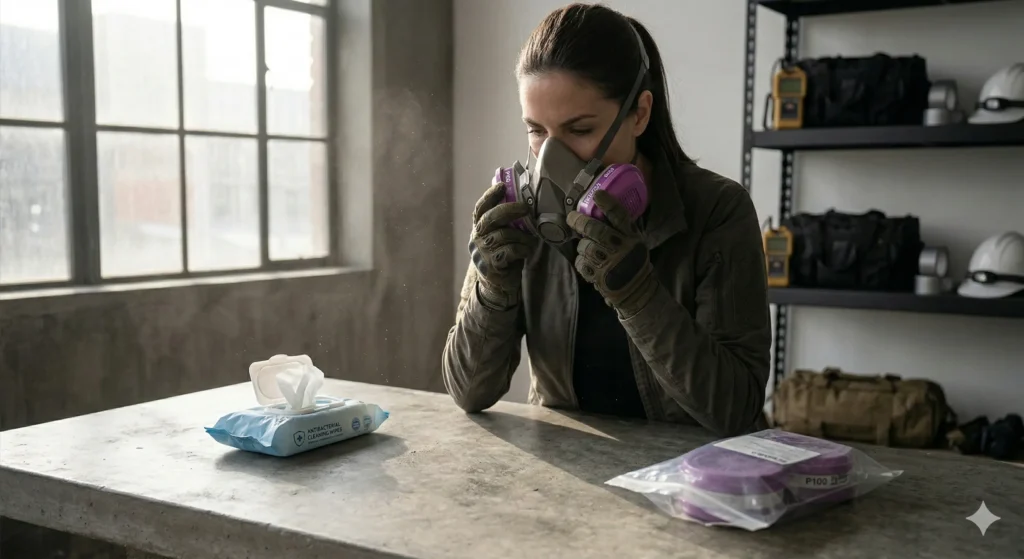
The most expensive filtration cartridge in the world is completely useless if the mask does not fit your face perfectly. The rubber gasket must create an absolute airtight seal against your bare skin. If you have a thick beard or heavy facial hair, a traditional respirator will leak heavily, allowing toxic air to bypass the filters entirely. You must maintain a clean shaven face to guarantee your safety equipment functions as intended. Always perform a negative pressure check before entering a building by covering the air intakes with your palms and inhaling deeply to ensure no air leaks through the rubber edges.
5. Maintenance and Safe Storage
Your respiratory equipment requires meticulous maintenance to remain effective over time. After every single exploration, you must wipe down the interior rubber gasket with an antibacterial cleaning wipe to remove sweat and prevent bacterial growth. Furthermore, you must store your P100 filters in a sealed airtight plastic bag when they are not in use. If you leave the filters exposed to the open air inside your backpack, they will continue to passively filter the ambient room air and eventually become completely clogged and useless before you even reach your next location.
Conclusion
Protecting your respiratory system is the most critical aspect of any physical safety plan. By investing in a high quality mask and replacing your heavily used filters regularly, you can confidently document decaying history without sacrificing your long term health. Never underestimate the invisible hazards floating in the stagnant air of a forgotten room.
Over to you: Have you ever struggled to use your camera viewfinder while wearing a heavy half face mask? Do you have any specific tips for keeping your safety gear clean out in the field? Share your techniques in the comments below!