
Category: The Unseen | Reading Time: 8 Minutes
Embarking on an urban legend exploration trip allows you to peel back the layers of regional folklore and discover the hidden truth behind local myths. Every small town across America has a spooky story that teenagers whisper to each other around campfires. These tales usually involve a haunted bridge, a cursed stretch of dirt road, or an abandoned farmhouse deep in the woods.
As historical documentarians, our goal is not to hunt for ghosts. Instead, we aim to investigate the cultural history and the orally transmitted stories that give these undocumented locations their mysterious reputations. This guide will teach you how to research regional myths, separate historical fact from exaggerated fiction, and safely document these culturally significant sites.
1. The Origin of Orally Transmitted Stories
Before you grab your camera and head out the door, you must understand how local folklore develops over time. An urban legend rarely materializes out of thin air. In almost every single case, there is a tiny kernel of historical truth buried deep within the exaggerated narrative.
A story about a haunted asylum might stem from very real and tragic historical mistreatment of patients during the nineteenth century. A legend about a cursed train tunnel often originates from a forgotten industrial accident where railway workers lost their lives building the local infrastructure. When you approach these locations, you must respect the very real human history that sparked the supernatural rumors in the first place. Your objective is to honor that history through careful documentation rather than sensationalizing the spooky elements.
2. Deep Dive Historical Research
Successful urban legend exploration requires spending just as much time in the local library as you do out in the field. You cannot rely on internet forums or social media rumors to find the truth. Those digital platforms thrive on exaggeration and frequently twist the actual geographical details of a site.
You need to access primary historical documents. Visit the county archives and ask the local librarian to help you search through microfiche copies of old newspaper publications. Look for property deeds, historical maps, and police reports from the era when the legend supposedly began. Comparing the spooky campfire story against hard municipal records is the absolute best way to pinpoint the exact location of the structure and understand what truly happened there decades ago.
3. Approaching Undocumented Locations Safely
Many of the sites associated with regional folklore are completely undocumented and lack any formal preservation efforts. They are often located deep in rural areas far away from paved roads or cellular service. This isolation makes them incredibly dangerous for the unprepared visitor.
You must apply all the safety protocols you would use for any decaying structure. Because these properties have been rotting naturally in the woods for a century, the structural hazards are severe. The wooden floorboards will be completely unstable, and wild animals often use these forgotten spaces for shelter. Always explore during the daytime, bring a comprehensive first aid kit, and ensure you have a physical topographic map in case your digital navigation devices fail in the remote wilderness.
4. Navigating Private Property Lines
A major complication with rural folklore locations is determining land ownership. Just because a cursed farmhouse is completely abandoned does not mean it is public property. In many cases, the land belongs to a local farming family or a large logging corporation.
You must never cross a marked property line or ignore posted trespassing signs simply because you want to photograph a famous local landmark. Use digital parcel maps to identify the current legal owner of the land. Taking the time to write a polite letter or make a phone call requesting permission to photograph the exterior of the property is always the most ethical approach. Many landowners are perfectly happy to let a respectful historical researcher document their property if you explain your educational goals clearly.
5. Documenting the Cultural Atmosphere
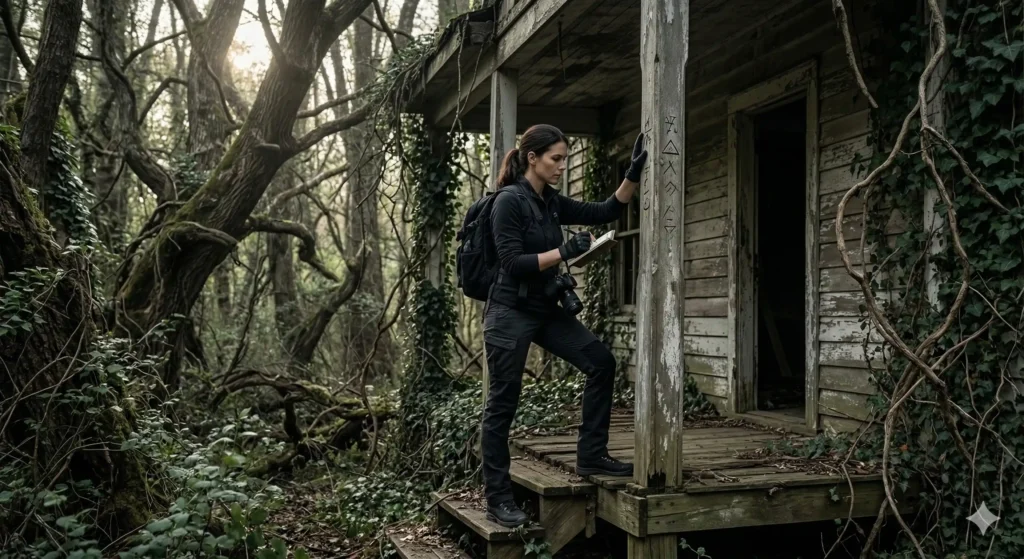
When you finally arrive at the location, your photography should focus on capturing the mood and the atmosphere that inspired the legend. Look for intricate architectural details that show the passage of time. Photograph the creeping ivy swallowing the brick walls or the way the afternoon sunlight casts long shadows across the decaying wooden porch.
Do not attempt to stage supernatural elements in your photographs. The natural decay of the location is beautiful and fascinating entirely on its own. By capturing the authentic physical state of the property, you provide a realistic visual record that grounds the wild local folklore in tangible reality.
Conclusion
Investigating the places where history and myth intersect is a thrilling pursuit. By treating these locations with respect and prioritizing hard research over sensationalism, you can preserve the fascinating cultural history that makes American folklore so enduring.
Over to you: What is the most famous local myth from your hometown? Have you ever visited the real location behind the story? Share your local legends in the comments below!